
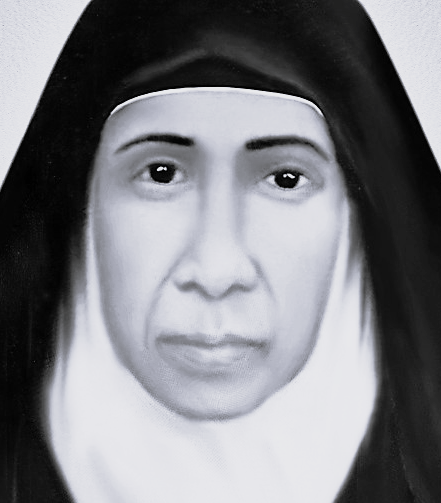
Eliswa della Beata Vergine Maria (al secolo: Eliswa Vakayil)
(1831 - 1913)
Fondatrice della Congregazione del Terz’Ordine delle Carmelitane Scalze, ora Suore Carmelitane Teresiane; ebbe sempre una grande fiducia in Dio e la speranza della meta celeste la sostenne nelle difficoltà, che affrontava con serenità. La sua speranza risplendette eroicamente nelle difficoltà legate alla fondazione della nuova Congregazione
Eliswa della Beata Vergine Maria (al secolo: Eliswa Vakayil) nacque il 15 ottobre 1831 a Ochanthuruth (Kerala, India), in una famiglia benestante di proprietari terrieri, molto credenti.
Dopo aver ricevuto da un precettore, gli insegnamenti culturali di base, a sedici anni, fu data in sposa a Vatharu Vakayil, un ricco uomo d’affari di Koonammavu, con il quale, nel 1851, ebbe una figlia. Rimasta vedova l’anno seguente, scelse una vita di preghiera e di solitudine, scandita dalla frequente partecipazione ai sacramenti e dalla cura dei poveri, vivendo in una semplice capanna.
Nel 1862 conobbe il Carmelitano Scalzo italiano p. Leopoldo Beccaro e, con la sua guida spirituale, diede vita alla prima Congregazione locale del Kerala, il Terzo Ordine delle Carmelitane Scalze (TODC), divenute poi Suore Carmelitane Teresiane. La vita della nuova famiglia religiosa univa alla contemplazione la vita attiva nell’istruzione e formazione delle fanciulle povere ed orfane, nell’assistenza degli abbandonati e dei più bisognosi.
Seguita dalla figlia e dalla sorella più giovane, inizialmente visse in una casa costruita con canne di bambù all’interno della proprietà della figlia a Koonammavu, dove più tardi fu costruito il convento di Santa Teresa. Alle tre donne, legate alla Chiesa di rito latino, si unirono altre donne di rito siro-malabarese. Per questo per i primi vent’anni la Congregazione si sviluppò con il doppio rito. Il 13 febbraio 1866 le tre donne di rito latino (Eliswa, Thresia e Anna) ricevettero lo scapolare carmelitano e, il 6 luglio 1868, emisero la professione religiosa.
In seguito alla decisione di Leone XIII di erigere i primi Vicariati siro-malabaresi, nacquero due istituti religiosi femminili indipendenti: la Congregazione della Carmelitane Teresiane (CTC) di rito latino e la Congregazione della Madre del Carmelo (CMC) di rito siro-malabarese. In queste circostanze, Madre Eliswa fondò un nuovo convento di San Giuseppe, con le consorelle di rito latino, a Varapuzha, dove trascorse gli ultimi 23 anni della vita, svolgendo l’incarico di priora, maestra delle novizie, educatrice delle ragazze e delle orfane.
Morì nel convento di San Giuseppe a Varapuzha (India) il 18 luglio 1913.
Madre Eliswa visse una profonda unione con il Signore, attraverso la Santa Comunione e le lunghe ore davanti al Santissimo Sacramento.
Ebbe sempre una grande fiducia in Dio e la speranza della meta celeste la sostenne nelle difficoltà, che affrontava con serenità. La sua speranza risplendette eroicamente nelle difficoltà legate alla fondazione della nuova Congregazione.
Mostrò amore verso Dio soprattutto per il suo impegno di preghiera e per la puntualità con cui sbrigava i propri doveri, prima di sposa e madre, quindi di monaca e fondatrice di un istituto religioso. L’espressione del suo amore verso Dio si manifestava nell’amore verso il prossimo, per amore del quale fondò una nuova congregazione religiosa per l’educazione delle fanciulle povere oppure orfane, l’assistenza degli emarginati e dei più bisognosi. Con la sua attività contribuì alla promozione umana ed intellettuale delle donne nel complesso contesto sociale e religioso dell’India a cavallo del XIX e XX secolo.
La fama di santità si manifestò durante la vita e dopo la sua morte, giungendo sino ai giorni nostri unita ad una certa fama signorum.
Due testimonianze
L'Arcivescovo Soosa Pakiam parla del modello di vita di Madre Eliswa in Propagating faith.
«Il suo modello di vita era di per sé un modello di propagazione della fede. Quella vita attrasse sua figlia Anna e sua sorella. Per trasmettere la fede alle bambine, Madre Eliswa aprì collegi e scuole. Lì insegnava la fede alle bambine in modo toccante. Attraverso queste bambine, riusciva a trasmettere lo spirito di fede alle famiglie».
«La virtù caratteristica della vita di Madre Eliswa era la serenità abituale. Questa serenità era il prodotto di altre virtù. Abbiamo molti esempi. Il matrimonio a sedici anni, la morte del marito a vent'anni, la morte della figlia Anna a ventun anni, la successiva morte della sorella. Quando dovette lasciare tutto, la serenità che manifestò fu l'emanazione di altre virtù».
«La Madre apparteneva a una famiglia molto ricca, ma non mostrava alcun interesse per questo. Avrebbe potuto costruire una casa confortevole. Ma non lo fece. Madre Eliswa non mostrò alcuna difficoltà quando dovette lasciare quella casa. Madre Eliswa costruì anche la seconda casa in spirito di povertà e visse lì con lo stesso spirito. Madre Eliswa fu un buon modello per lo spirito di povertà».
S. Ecc.za Mons. Selvister Ponnumuthan
«Certo, poiché condusse una vita santa, non solo per la propria santità, ma anche per il bene degli altri. C'è un detto che dice "non si va da soli in paradiso". Era ben consapevole della sua missione di fondatrice. Voleva che anche gli altri conducessero una vita di santità. Nacque il giorno della festa di Santa Teresa d'Avila. Fu molto influenzata dalla santa. Penso che sia degna di essere salutata come santa».
«Sicuramente la sua beatificazione è molto positiva per la Chiesa indiana, non solo per la Chiesa di Varapuzha. Diventerà una risorsa per la Chiesa universale. Molto di più, diventerà una risorsa per le donne, soprattutto per le donne del XIX secolo. Per le vedove, per le donne oppresse e sofferenti e per le donne emarginate è fonte di ispirazione».
In vista della beatificazione
Per la beatificazione di Eliswa della Beata Vergine Maria, la Postulazione della Causa ha presentato all’esame del Dicastero l’asserita guarigione miracolosa, attribuita alla sua intercessione, di una bambina che, nella fase fetale, è stata guarita da labioschisi. La mamma, venticinquenne, apprese di essere incinta nell’ottobre 2004 e iniziò gli esami di routine. Il 24 maggio 2005, alla trentaquattresima settimana di gravidanza, un’ecografia effettuata presso il “Lourdes Hospital” di Ernakulam rilevò una sospetta labiopalatoschisi (labbro leporino) del feto. Il 25 maggio 2005 la gestante fu sottoposta a un’altra ecografia che confermò la labioschisi.
Artefice dell’invocazione fu una suora, religiosa delle Suore Carmelitane da madre Eliswa fondate, direttrice degli infermieri in servizio nel Reparto di Ginecologia e superiora del convento. Il 27 giugno 2005 la religiosa incontrò casualmente la mamma della sanata, afflitta per la malformazione della bambina che doveva partorire. Dopo aver cercato di confortarla, la invitò ad invocare madre Eliswa e le diede una sua immaginetta con le preghiere per chiedere la sua intercessione. La suora invitò a pregare madre Eliswa anche la madre della sanata e sua sorella. Alle invocazioni alla Vakayil si unirono il marito e altri parenti, mentre la suora invocò madre Eliswa insieme alla sua comunità. Le preghiere continuarono il 28 e il 29 giugno quando la madre della sanata fu spostata in sala parto e poi in sala operatoria per effettuare il taglio cesareo, partorendo una bambina perfettamente sana che non presentava alcuna malformazione né al labbro superiore, né al palato e né all’arcata dentale.
La preghiera fu univoca, rivolta solo a madre Eliswa. L’invocazione, sia personale che comunitaria, fu fatta con fede e fu antecedente la presunta guarigione miracolosa.
HOMILY FOR BEATIFICATION OF BLESSED ELISWA VAKAYIL
ARCHDIOCESE OF VERAPOLY, KERALA
On 8th November 2023, the Vatican officially declared Mother Eliswa as Venerable and exactly 2 years later, today, on 8th November 2025, we are gathered together in thanksgiving, to witness the beatification of Mother Eliswa; as we declare her Blessed. Today, the Church celebrates with great joy and gratitude, not only her heroic virtues but her simplicity and radical witnessing through her God-centered lifestyle, in remaining faithful to God to the very end, with graceful fortitude.
Dear People of God, I invite you to walk with me today as we recall the story of Mother Eliswa, which mirrors the life journey of every saint. A concrete YES that is constant and consistent in every situation that God places before them. Let us pray for the grace to emulate her virtue of humble submission to the Will of God, through persistent prayer and persevering obedience.
I assure you that Mother Eliswa can identify with every child and youth. From her childhood itself, Eliswa showed a keen interest in prayer and sacrifices. From her earliest days, young Eliswa stood apart: devoted to prayer, tenderly drawn to the Eucharist, deeply devoted to the Blessed Virgin Mary, and empathetically attuned to the needs of the poor. At the tender age of a child, Eliswa was exceptionally compassionate to the poor and the underprivileged.
Mother Eliswa can identify with every daughter, every sister, every woman. Being the eldest of eight children to her parents, Thomman and Thanda, she embraced the challenges and responsibilities of a daughter, a sister and a woman. Submitting to the will of her parents, Eliswa obeyed them to marry Vatharu Vakayil, who died unexpectedly, not long after the birth of their only child, Anna. Through these personal experiences, Mother Eliswa can relate with every wife, every pregnant woman, every mother, every single-mother, every mother of a daughter and every widow after the death of her husband. Nourished through frequent adoration before the Blessed Sacrament and engaging in constant acts of mercy by yielding to the Holy Spirit, she allowed God to reshape her identity – from wife and mother to bride of Christ and spiritual mother to many. Her exemplary life of faith and quiet surrender to God, was instrumental for her sister Thresia and daughter Anna to also join her way of life. These three women were the foundation of the Third Order of the Carmelite Discalced (T.O.C.D.) and of the present Congregation of Teresian Carmelites (C.T.C.). It was the first indigenous convent in Kerala, and a pioneering moment for the Church in India.
Mother Eliswa can also identify with every consecrated woman and religious nun. In a very special way, Mother Eliswa can identify with the Contemplatives and the Congregation of Teresian Carmelites (C.T.C) as we celebrate her beatification today. Mother Eliswa opened the doors for women of different rites, both the Latin Rite and the Syro-Malabar Rite, to embrace consecrated life. This inclusive vision was ahead of her time and a true reflection of synodality in action — walking together in communion. Her unwavering dedication to establishing a school, orphanage, and boarding house for girls, along with her commitment to education, pastoral care, and the empowerment of women—especially those who were poor and marginalized—stands as a lasting testament to her ardent compassion and faith.
Transcending all borders, Mother Eliswa can relate with every Catholic, every citizen of India and with the whole of humanity. She has walked through the hardships of this earthly journey, which we now partake. Mother Eliswa teaches us to root everything in Christ — in the Eucharist, in community, and in courageous faith. This flame of love for God burned brightly through every season of her life.
The founding essence of her enduring faith lies in her spirituality, vision, and mission, which anchored in her identity as a faithful disciple of Jesus Christ through baptism—the very heart of synodality. As we, the Church, walk the path of synodality, listening, discerning, and journeying together — Mother Eliswa shows us the way. In a world faced with moral confusion and spiritual hunger, gender inequality and familial breakdown, ecclesial divisions and cultural upheaval, and all other challenges of family, church and society, Mother Eliswa teaches that the choice to become a saint will not be easy but it will be worth it. She invites us today, through her beatification, and together with the communion of saints, to open our hearts and to be attentive to the voice of the Holy Spirit prompting us to do God’s Will at each present moment, no matter how challenging it may be.
Therefore, I urge you, disciples of Christ and devotees of Mother Eliswa, to take courage! We are not alone in our daily struggles. Mother Eliswa understands and intercedes for us all in a very personal way.
We are all aware of the miracle in the womb. In 2005, in Ernakulam, Kerala, a baby girl was diagnosed with a cleft lip at 34 weeks of pregnancy. Through the intercession of Mother Eliswa, the child was miraculously healed in the womb, astonishing medical experts. The Vatican’s recognition of this miracle brought Mother Eliswa to this day of beatification, inspiring countless hearts with hope, faith, and wonder at God’s grace.
Now, Mother Eliswa is a step closer to sainthood. As we praise and thank God for the first miracle, I invite you to pray for a second miracle to take place. From now being declared blessed, we now look forward for her being canonized as a saint in God’s time, as countless hearts continue to be uplifted and inspired by her holy, courageous, and unwavering life of faith and love.
So today, with immense JOY and GRATITUDE, we rejoice to witness this historic moment for the global Carmelite family, for the Archdiocese of Verapoly, for the Church of Kerala, for India, for Asia and for the Universal Church. We rejoice with all the consecrated women, all mothers, all those who suffer in silence and still choose to love. Her tomb at Varapuzha, which I too had the privilege to visit two days ago, has become a place of pilgrimage, where people of all backgrounds come to seek her intercession. And now, she intercedes for us from heaven as Blessed Eliswa — a beacon of hope, a spiritual mother, and a saint for our times. Mother Eliswa, pray for us. Amen!
Saturday 8TH November 2025, National Shrine Basilica of our Lady of Ransom, Vallarpadom, Kochi, Kerala, India
Cardinal Sebastian Francis
Bishop of Penang, Malaysia
DICASTERIUM DE CAUSIS SANCTORUM
VERAPOLITANA
BEATIFICATIONIS ET CANONIZATIONIS
Venerabilis Servae Dei
ELISWAE A BEATA MARIA VIRGINE
(in saeculo: Eliswae Vakayil)
Fundatricis Congregationis Carmelitarum Teresianarum
(1831-1913)
_________________________
DECRETUM SUPER MIRACULO
La Venerabile Serva di Dio Eliswa della Beata Maria Vergine (al secolo: Eliswa Vakayil) nacque a Ochanthuruth (India), il 15 ottobre del 1831, dalla nobile famiglia Vyppissery. Pur nutrendo il desiderio di amare e servire Gesù tra i poveri e i bisognosi, il 21 aprile 1851, a sedici anni, fu data in sposa a Vatharu Vakayil, un ricco uomo d’affari, dal quale ebbe una figlia. Dopo la morte del marito, nel 1851, visse per 14 anni con la figlia in un piccolo granaio. Il 13 febbraio 1866, insieme alla figlia e a sua sorella e con l’aiuto dei missionari Carmelitani europei, p. Leopoldo Beccaro e l'arcivescovo Bernardino Baccinelli, fondò il Terzo Ordine delle Carmelitane Scalze (T.O.D.C.), divenute poi Suore Carmelitane Teresiane. Aprì tale Congregazione sia alle donne di rito siro-malabarese, che a quelle di rito latino. In seguito, nel 1890, la Congregazione fu divisa in due, secondo i riti, e la Venerabile Serva di Dio lasciò il convento e le proprietà annesse alle suore di rito siro-malabarese, trasferendosi a Varapuzha. Qui continuò per 23 anni la vita contemplativa e l’attività pastorale ed educativa attraverso la scuola, l’orfanotrofio e la casa per ragazze. Morì il 18 luglio 1913, recitando i santi nomi di Gesù e di Maria.
Il decreto sull’eroicità delle virtù venne promulgato l’8 novembre 2023.
In vista della sua beatificazione, la Postulazione della Causa ha sottoposto al giudizio di questo Dicastero delle Cause dei Santi un presunto fatto miracoloso avvenuto in India nel 2005 a vantaggio di un feto, poi divenuto bambina. La mamma della bambina in questione, dopo aver appreso di essere incinta a ottobre del 2004, eseguì degli esami ecografici a dicembre 2004 e a marzo 2005. Gli esiti degli esami furono normali, ma nell’ecografia eseguita a maggio risultarono delle anomalie inerenti a un presunto caso di palatoschisi. Ripetuto nuovamente l’esame in maggio, risultò “un feto vivo di 34-35 settimane, con liquido amniotico ridotto e presenza di Labioschisi”. Agli inizi di giugno la madre venne ricoverata in ospedale per anossia fetale intrauterina. Si confermò la presenza di un feto vivo con sospetta labio-palatoschisi e ritardo di crescita intrauterina. La paziente fu dimessa dall’ospedale a metà del mese giugno con prescrizione di assoluto riposo e controllo dei movimenti fetali. Alla fine del mese fu di nuovo ricoverata per procedere al parto. In questo frangente del ricovero, la signora incontrò casualmente in una delle stanze del reparto di ginecologia, una suora, religiosa della Congregazione Carmelitane Teresiane che, venuta a conoscenza della problematica, le propose di pregare la Venerabile Serva di Dio Eliswa della Beata Maria Vergine, affinché potesse intercedere per la guarigione del feto. La bambina nacque sana senza alcun difetto, con naso-bocca normali come pure il palato e le labbra. Appare evidente la concomitanza cronologica e il nesso tra l’invocazione alla Venerabile e la guarigione del feto.
Su tale evento ritenuto miracoloso, fu istruita l’Inchiesta diocesana, presso l’Arcidiocesi di Verapoly, dal 30 maggio 2008 all’8 ottobre 2014, la cui validità giuridica è stata riconosciuta da questo Dicastero con decreto del 12 gennaio 2018. La Consulta Medica del Dicastero nella seduta dell’11 gennaio 2024 ha riconosciuto che la guarigione fu istantanea, completa e duratura, inspiegabile alla luce delle attuali conoscenze mediche. Il 26 novembre 2024 si è tenuto il Congresso Peculiare dei Consultori Teologi e il 1° aprile 2025 ha avuto luogo la Sessione Ordinaria dei Padri Cardinali e Vescovi.
Alla domanda se si sia trattato di un vero miracolo compiuto da Dio per intercessione della Venerabile Serva di Dio Eliswa della Beata Maria Vergine, gli uni e gli altri hanno dato risposta affermativa.
Il sottoscritto Cardinale Prefetto ha quindi riferito tutte queste cose al Sommo Pontefice Francesco. Sua Santità, accogliendo e confermando i voti del Dicastero delle Cause dei Santi, ha oggi dichiarato: Consta il miracolo, compiuto da Dio per intercessione della Venerabile Serva di Dio Eliswa della Beata Maria Vergine (al secolo: Eliswa Vakayil).
Il Sommo Pontefice ha poi disposto che il presente decreto venga pubblicato e inserito negli atti del Dicastero delle Cause dei Santi.
Dato a Roma, il 14 aprile 2025
Marcello Card. Semeraro
Prefetto
+ Fabio Fabene
Arciv. tit. di Montefiascone
Segretario
DICASTERIUM DE CAUSIS SANCTORUM
VERAPOLITANA
BEATIFICATIONIS ET CANONIZATIONIS
Venerabilis Servae Dei
ELISWAE A BEATA MARIA VIRGINE
(in saeculo: Eliswae Vakayil)
Fundatricis Congregationis Carmelitarum Teresianarum
(1831-1913)
_________________________
DECRETUM SUPER VIRTUTIBUS
“Chi crede in me, come dice la Scrittura, dal suo grembo sgorgheranno fiumi dʼacqua viva” (Gv 7, 38)
La vita di Madre Eliswa della Beata Vergine Maria (al secolo: Eliswae Vakayil), fu come l'albero piantato in riva al fiume (Sal 1, 3): fin dall'infanzia godette del sostegno divino e radicò la sua vita in questo fiume. Ricevette il carisma nel Carmelo e fondò la prima Congregazione religiosa femminile in Kerala, avviando la prima scuola per ragazze annessa al convento. La sua vita e la sua attività contribuirono alla rivitalizzazione della famiglia nella Chiesa locale e alla promozione umana ed intellettuale delle donne nel complesso contesto sociale e religioso dell’India a cavallo del XIX e XX secolo.
Eliswa nacque il 15 ottobre del 1831, dalla nobile famiglia Vyppissery nel Kerala (India). Poiché a quel tempo l’istruzione accademica per le ragazze non esisteva, venne istruita in casa da precettori, oltre che da suo padre e dai suoi fratelli. Pur nutrendo il desiderio di amare e servire Gesù tra i poveri e i bisognosi, la Serva di Dio acconsentì al desiderio dei suoi genitori e, a sedici anni, fu data in sposa a Vatharu Vakayil, un ricco uomo d’affari, dal quale ebbe una figlia il 21 aprile 1851. Ma la vita matrimoniale fu solo un passaggio del suo viaggio verso la vita consacrata.
Infatti, il marito Vatharu si ammalò improvvisamente di una malattia sconosciuta e incurabile, morendo nel 1851. La Serva di Dio riuscì a superar questo momento di prova grazie a lunghe ore di preghiera, soprattutto davanti al Signore nel Ss.mo Sacramento nella chiesa parrocchiale. Intanto, raccolse intorno a sé i poveri e gli oppressi, raccontando loro di Dio Padre, della dignità e degli obblighi morali dei figli di Dio.
Eliswa rimase in costante preghiera, conducendo per 14 anni una vita semplice con la figlia in un piccolo granaio e approfondendo il carisma donatole dallo Spirito Santo. Insieme a sua figlia e a sua sorella, che condivisero il suo carisma, e con l’aiuto dei missionari Carmelitani europei, p. Leopoldo Beccaro e l'arcivescovo Bernardino Baccinelli, la Serva di Dio, il 13 Febbraio 1866, fondò quella che sarebbe divenuta la prima Congregazione religiosa femminile in Kerala: il Terzo Ordine delle Carmelitane Scalze (T.O.D.C.), divenute poi Suore Carmelitane Teresiane. Aprì tale Congregazione sia alle donne di rito siro-malabarese, che a quelle di rito latino.
Successivamente, nel 1890 la Congregazione fu divisa in due, secondo i riti, e la Serva di Dio lasciò il convento e le proprietà annesse alle suore di rito siro-malabarese, trasferendosi a Varapuzha. Qui continuò per 23 anni la vita contemplativa e l’attività pastorale ed educativa attraverso la scuola, l'orfanotrofio e la casa per ragazze. Ricevette la ricompensa eterna il 18 luglio 1913, recitando i santi nomi della Gesù e di Maria.
Fin dall'infanzia, fu una grande devota della Beata Vergine Maria e decorò la sua statua con fiori fino alla fine della sua vita, testimoniando e diffondendo la spiritualità mariana continuamente.
La vita di Madre Eliswa è stata un cammino alla sequela di Gesù, Agnello Pasquale, identificandosi con il suo Sposo Celeste. Sperimentò profondamente l'amore di Dio nella contemplazione e visse un amore fraterno esemplare. Come l’uomo della parabola del Vangelo, ella scoprì il Tesoro nascosto e abbandonò ogni cosa temporale per possedere un tesoro in cielo. Rimase in silenzio, quando perse ogni cosa materiale e ringraziò Dio per la sua meravigliosa provvidenza. Come dice il Signore, «Chiunque avrà lasciato case, o fratelli, o sorelle, o padre, o madre, o figli, o campi per il mio nome, riceverà cento volte tanto e avrà in erediterà la vita eterna» (Mt 19, 29), Madre Eliswa ci ricorda che nessuno può dubitare di tale promessa del Creatore: lei per prima sperimentò tale straordinaria provvidenza e ringraziò il Signore per il suo amore incondizionato.
In virtù della fama di santità e di segni, fu celebrata presso il Tribunale Ecclesiastico della Diocesi di Verapoly l’Inchiesta diocesana, in due distinte fasi, tra il 2008 e il 2014, la cui validità giuridica venne riconosciuta dal Dicastero con Decreto del 7 aprile 2017. Preparata la Positio, essa fu sottoposta all’esame dei Consultori Storici il 18 maggio 2021 e quindi alla valutazione dei Consultori Teologi il 20 dicembre 2022, entrambi con esito positivo. I Padri Cardinali e Vescovi nella Sessione Ordinaria del 7 novembre 2023 hanno riconosciuto che la Serva di Dio ha esercitato in grado eroico le virtù teologali, cardinali ed annesse.
Il sottoscritto Cardinale Prefetto ha quindi riferito tutte queste cose al Sommo Pontefice Francesco. Sua Santità, accogliendo e confermando i voti del Dicastero delle Cause dei Santi, ha oggi dichiarato: Constano le Virtù teologali Fede, Speranza e Carità verso Dio e verso il prossimo, nonché le Virtù cardinali Prudenza, Giustizia, Fortezza e Temperanza, e le Virtù annesse, in grado eroico, della Serva di Dio Eliswa della Beata Vergine Maria (al secolo: Eliswa Vakayil), Fondatrice della Congregazione Teresiane Carmelitane, nel caso e per le finalità di cui si tratta.
Il Sommo Pontefice ha poi disposto che il presente decreto venga pubblicato e inserito negli atti del Dicastero delle Cause dei Santi.
Dato a Roma, l’8 novembre dell’anno del Signore 2023
Marcello Card. Semeraro
Prefetto
+ Fabio Fabene
Arciv. tit. di Montefiascone
Segretario